




Attending the Congress
Navigation Panel
Access for minors
Arriving in Japan
Practicalities onsite
Destination - Kyoto
Tips & tricks
Visa & passport
Contacts
Access for Minors
Minors (individuals under 18 years of age) may access the congress venue.
- Minors must be registered (no fee applies), please contact [email protected] to request the appropriate registration form.
- Each minor must be accompanied at all times by a parent or guardian (1 minor = 1 adult). The accompanying adult must be a registered IPNA 2027 attendee.
Adults are fully responsible for ensuring appropriate behavior from minors. Any disruption to congress activities will not be tolerated. - The organizers are not responsible for any content presented during the congress that may be considered unsuitable for children.
- Minors will not be admitted to the opening ceremony, plenary sessions, exhibition area, Interventional Nephrology Course, and industry sessions.
- Registered minors will be required to wear a badge or wristband (depending on age), which must include the contact information of their accompanying adult while onsite.
Arriving in Japan
How to get to Kyoto
Airports
The congress venue is accessible via Osaka or Tokyo international airports:
Kansai International Airport (KIX) → Kyoto
Kansai airport is relatively easy to maneuver. You can choose 3 options to get from KIX to Kyoto Station.
Airport Limousine Bus (Easiest with Luggage)
- Cost: ~¥2,800
- Time: ~90 minutes
- How:
- Direct bus from KIX to Kyoto Station
- Terminal 1, Ground Floor Bus stop 8.
- Terminal 2, Bus stop 2.
- Tickets:
- Purchase at airport bus counters or machines
- Some services accept IC cards
- Notes:
- Luggage is stored under the bus
- Traffic may cause delays
Local / Rapid Train (Cheapest & Best Value)
- Cost: ~¥1,900
- Time: 90–110 minutes
- How:
- Take JR Kansai Airport Rapid Train
- Transfer at Osaka Station to JR Kyoto Line
- Tickets:
- Use an IC card (tap in & out), or
- Buy a ticket from JR machines (English available)
- Notes:
- One transfer
Do NOT take a taxi
Taxi fares from the airport to Kyoto are extremely expensive (¥25,000+).
Bullet Train (Fast but Not Recommended)
- Cost: ¥3,500–¥4,000 (Approx.)
- Time: ~70 minutes
- Requires multiple transfers
- Not necessary for such a short distance
Kansai International Airport Map
Tokyo Airports
- Haneda Airport (HND) is closer to both central Tokyo and Yokohama, offering convenient access via train or bus.
It handles a high volume of domestic and international flights and is known for efficient operations and modern facilities. - Narita Airport (NRT), located further from Yokohama, also serves many international routes and is connected to the city by rail and highway bus services.
Travel time from Narita to Yokohama is longer compared to Haneda, but it remains a widely used point of entry for international travelers.
Click here to go back to the top of the page
Practicalities Onsite
Business Hours
Banks in Japan typically operate from 9 a.m. to 3 p.m., Monday to Friday, and are closed on weekends and public holidays.
Government offices generally operate from 8:30 a.m. to 5:15 p.m.
Private businesses are usually open from 9 a.m. to 6 p.m., while shops, including those in shopping districts, typically open around 10 a.m. and close around 8 p.m. However, operating hours can vary by store and location, and some may be closed on certain days, so it’s advisable to check specific details in advance.
Business Hours
Banks in Japan typically operate from 9 a.m. to 3 p.m., Monday to Friday, and are closed on weekends and public holidays.
Government offices generally operate from 8:30 a.m. to 5:15 p.m.
Private businesses are usually open from 9 a.m. to 6 p.m., while shops, including those in shopping districts, typically open around 10 a.m. and close around 8 p.m. However, operating hours can vary by store and location, and some may be closed on certain days, so it’s advisable to check specific details in advance.
Currency and bank information
The official currency in Japan is the Japanese Yen (JPY).
Upon arrival, you can exchange foreign currencies for Japanese Yen in the Airport at the Money Exchange Counter. It’s advisable to carry some cash, as some places may not accept credit cards.
ATMs that accept international cards are widely available in Yokohama, operating 24-hours a day. However, availability may vary by location, so it’s advisable to check beforehand.
Banks in Japan typically operate from 9 a.m. to 3 p.m., Monday to Friday, and are closed on weekends and public holidays.
Electricity
For Japan there are two associated plug types, A and B. Plug type A is the plug which has two flat parallel pins and plug type B is the plug which has two flat parallel pins and a grounding pin. Outlets with two flat pins (Type A) are more commonly found. Japan operates on 100V supply voltage and 50/60Hz.

Emergency numbers
Police: 110
Fire department/Ambulance (medical emergencies): 119
Maritime emergency (coastal incidents):118
Japan visitor hotline (operated by the Japan National Tourism Organization):
- Within Japan: 050-3816-2787
- From overseas: +81-50-3816-2787
Available 24/7, support in English, Chinese, Korean, and Japanese.
Language
The official language in Japan is Japanese.
While English is generally understood at hotels and major tourist attractions, it may not be widely spoken by staff at department stores or local restaurants. However, signs, menus, and public transportation guides in Yokohama are often available in English, and some facilities have staff who can assist in English.
Time
Kyoto, like the rest of Japan, operates in the Japan Standard Time (JST) zone, which is GMT+9:00.
Climate
Expect the daytime high temperatures in Kyoto to be around 14°C (57°F) and nighttime lows near 7°C (45°F) in March.
What to wear in March
At the end of March, temperatures in Kyoto range between 7°C and 14°C. During the day it can be sunny, but mornings and evenings can still be quite chilly. A medium-weight jacket or coat is recommended. While rainfall is minimal, occasional warmer days can push temperatures above 20°C, so it’s a good idea to pack some lighter clothes as well for comfort.
Information for Muslim participants
- Room 670 (for male)
- Room 673 (for female)
- Childcare / Mothers’ Room: (Nursing and Diaper-Changing Room)
Click here to go back to the top of the page
Destination
Kyoto living tradition
It was the capital for over one thousand years
Kyoto was designed to be a capital city. Emperor Kanmu transferred the imperial court here in 794, and it remained until 1869. Being the capital also made Kyoto a cultural center. You can feel the length of Kyoto’s enduring influence in everything from the continually refined cultural practices to the buildings and gardens that have stood the test of time.
It has 14 UNESCO World Cultural Heritage sites
Thanks to its long history, Kyoto is a treasure trove of historical sites. There are 14 World Cultural Heritage sites within Kyoto City limits and 3 more in nearby locations. They include an elaborate castle that attests to the power of the shoguns, and historic shrines and temples that are home to countless precious works of art. Many other sites are National Treasures or Important Cultural Properties.
March – May
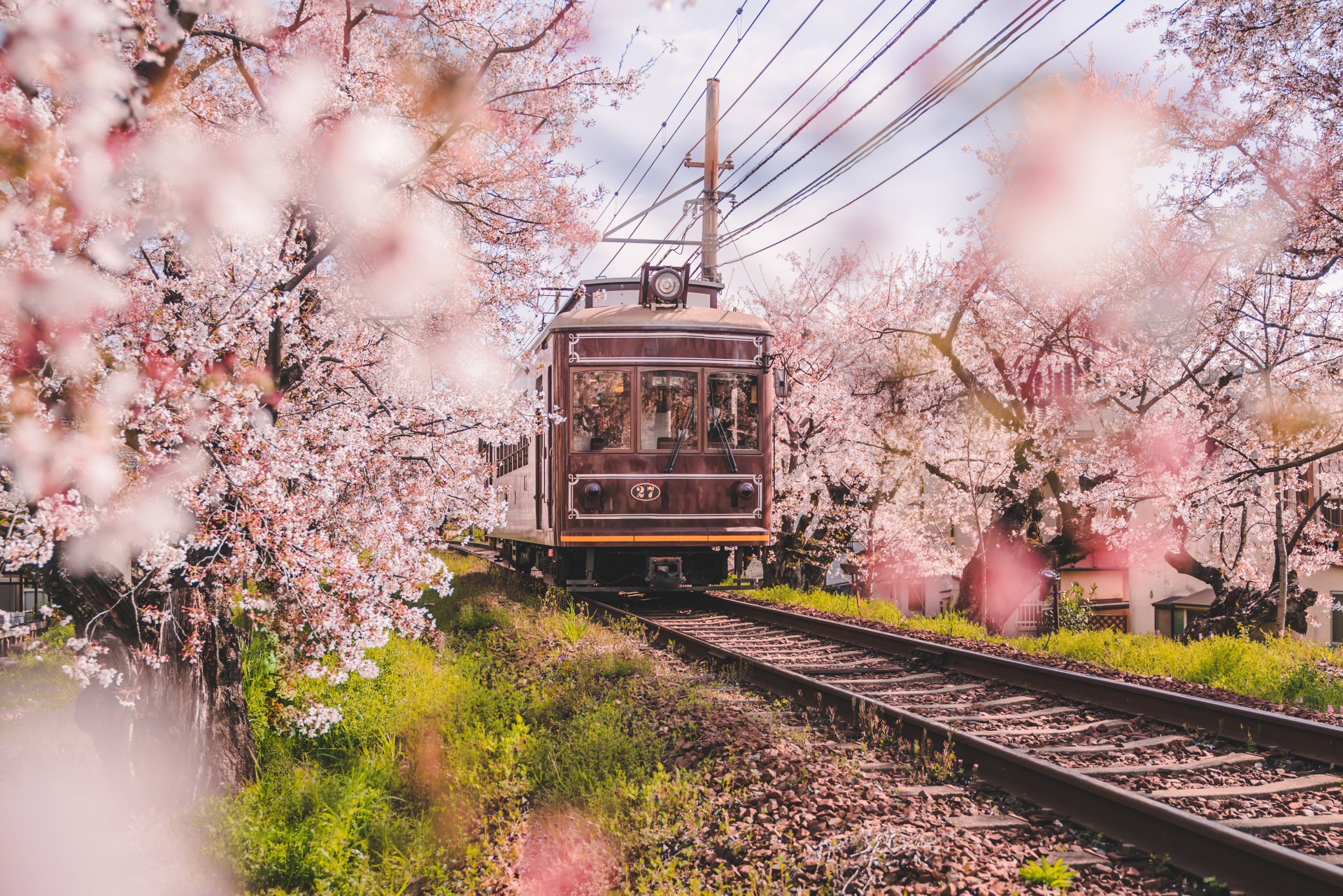
Spring weather in Kyoto is mild, and the cherry blossom displays make it a popular time to visit. Temperatures start to rise day by day from mid-March, and visitors can appreciate warm, sunny weather while exploring the outdoors. If you like to stretch your legs a bit, it’s a great time to go out for a hike in Kyoto!
Beginning in March, the city will be colored by a variety of seasonal flowers and plants, starting with plum blossoms, and then cherry blossoms, azaleas, wisteria, and irises, all blooming in succession. The April cherry blossoms are particularly beloved by visitors and locals alike, and for the short period that they bloom, it’s common to hold picnics and parties under the trees.
Click here to go back to the top of the page
Things to Do in Kyoto in Early-to-Mid March
To See
Plum Blossom Viewing
In early March, Kyoto’s plum blossoms come into full bloom. For the best views, visit Kitano Tenmangu, located near Kinkaku-ji. The shrine is surrounded by over a thousand plum trees that provide a stunning contrast to its red shrine buildings. Enjoy the seasonal blossoms with a warm cup of matcha.
Early Cherry Blossoms (Hanami)
March marks the beginning of the cherry blossom season in Kyoto. Scenic spots like Seimei Shrine and the Yodo Suijiro (Yodo River) area are home to the early-blooming Kawazu Sakura. These blossoms, typically appearing from mid-February to early March, are the first to bloom and signal the start of the sakura season in Kyoto.
To Experience
Tea Ceremony Experience
Kyoto is known for its rich tea culture. Immerse yourself in an authentic experience by participating in a traditional tea ceremony at one of the city’s many tea houses. It’s a chance to appreciate the art of tea preparation and the calming atmosphere of Kyoto’s historic tea culture.
To Visit
Arashiyama Bamboo Grove
Explore the serene Arashiyama Bamboo Forest, where towering bamboo stalks create a picturesque scene. Don’t miss nearby Tenryu-ji Temple and the scenic Togetsukyo Bridge.
Fushimi Inari Taisha
Visit the iconic Fushimi Inari Taisha with its thousands of red torii gates leading up Mount Inari. The hike through the gates offers both spiritual and natural beauty.
Gion District
Step back in time in Gion, Kyoto’s famous geisha district, and wander through its traditional wooden machiya houses. You might even spot a geisha or maiko on their way to an appointment.
Kinkaku-ji (Golden Pavilion)
Visit the stunning Golden Pavilion, a Zen Buddhist temple with an iconic golden exterior surrounded by beautifully landscaped gardens.
Kyoto Imperial Palace
The Kyoto Imperial Palace was the residence of Japan’s Imperial family until the capital moved to Tokyo in the 19th century. Explore its historic buildings and expansive gardens.
Nijo Castle
A UNESCO World Heritage Site, Nijo Castle is famous for its beautiful gardens and nightingale floors, which chirp when stepped on as a security measure against intruders.
Nishiki Market
Known as Kyoto’s Kitchen, Nishiki Market is a bustling marketplace offering fresh local produce, snacks, and Kyoto specialties. It’s a great place to sample authentic Kyoto food.
Nishijin District
Visit the Nishijin District, Kyoto’s historic weaving district, known for its centuries-old tradition of Nishijin-ori (traditional silk weaving). Explore the artisan workshops and galleries showcasing the region’s rich craftsmanship.
Tips & Tricks
Tax-free shopping
Traditional duty-free shops are located within international airports.
For more information click here
Tax-free shopping
Traditional duty-free shops are located within international airports.
For more information click here
Free walking tours in Kyoto
Tipping
In Japan, it’s not common to tip for services provided in bars, cafes, restaurants, taxis, and hotels. There are certain situations where tipping might be considered appropriate such as private guide or driver. However, tipping is not expected and should be done discreetly, even in these cases. The tip should be put in an envelope. It is possible to purchase small cash envelopes at convenience and stationery stores.
Recommendations
Most public toilets in Japan are free of charge, located in stations or department stores.
Click here to go back to the top of the page
Visa & passport
If you plan to attend IPNA 2027 in Japan, please check your visa requirements early and start the application process as soon as possible.
Do I need a visa to enter Japan?
You will need a visa to enter Japan if your country or territory is not on the visa exemption list for short-term stay.
Consult the official website of the Ministry of Foreign Affairs of Japan for visa requirements and view the list of countries that do not need a visa.
Do I need a visa to enter Japan?
You will need a visa to enter Japan if your country or territory is not on the visa exemption list for short-term stay.
Consult the official website of the Ministry of Foreign Affairs of Japan for visa requirements and view the list of countries that do not need a visa.
I do not qualify for a visa exemption (short-term stay). What type of visa do I need?
- Short-term business visa: This applies if your main purpose for travel is to attend the congress and your stay in Japan is within the period of 9 -17 March 2027.
- Tourist visa: If you plan to stay beyond 17 March 2027, please contact your local Japanese Embassy or Consulate for guidance about tourist visas.
Confirm your visa requirements by consulting the official Ministry of Foreign Affairs of Japan website.
Important reminder:
- Visa processing times vary by country. Apply as early as possible.
- IPNA 2027 organisers will support your application with documents only; they cannot influence embassy decisions.
Contacts
Congress Secretariat
C-IN (CZECH-IN s.r.o.)
www.c-in.eu
Prague Congress Centre
5. kvetna 65
140 21 Prague 4
Czech Republic
- Registration and General Questions:
[email protected] - Scientific Program, Abstracts, Invited Speakers, and Chairs:
[email protected] - Association Secretariat
[email protected] - Accommodation, Tours, Social Activities, Visa assistance
IPNA 2027 Local Secretariat (Japan)
[email protected]